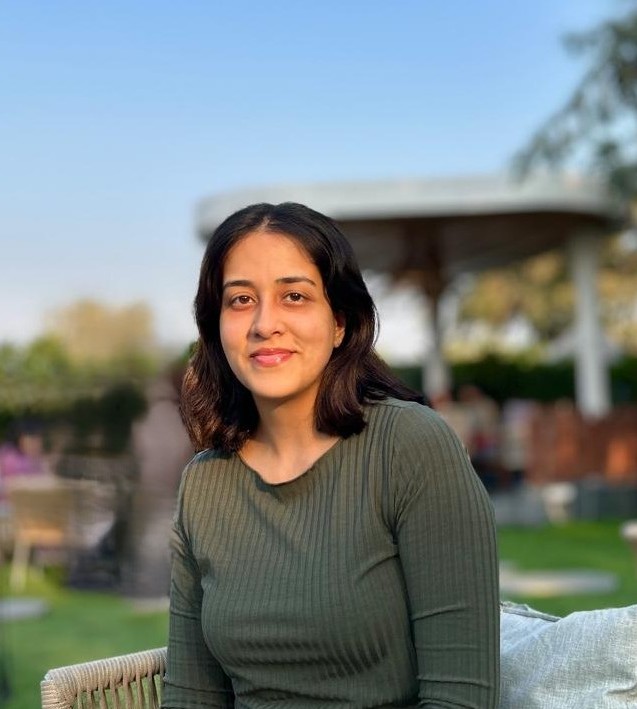
Author, Decision Debt | Fractional Systems Fixer | AI Adoption Advisor | Global Ops Lead  ·  EBAIL

"Most operational problems are not technology problems.
They are decision problems that have been waiting
for someone to name them."

What I bring

Senior advisory.
Clear mandate.

01

Senior advisory without the full-time overhead.

Strategic diagnosis and architecture, engaged fractionally. The depth without the dependency.

02

Pattern recognition built across sectors, not within one.

Semiconductor, healthcare, AI-native companies, global services. The structural challenges look similar. Culture and context never do.

03

Operational architecture that runs without me in the room.

An engagement ends when the system holds independently. Not when the retainer does.

04

Outcome ownership, not task delivery.

I take ownership of the result, not the process. That requires a clear mandate and room to work properly.

05

AI adoption with governance built in, not bolted on.

The tools are only as useful as the process underneath them. In practice: defining which tools are approved, who reviews outputs, how accountability is documented, and what changes in the workflow when AI is involved.

06

High ethical standards. Absolute client confidentiality.

What is observed stays there. What is advised is always in the client's interest, including when it is not what they wanted to hear.

European Network

EBAIL
European Business
AI Leadership

AI Governance Cross-border Ops Community Infrastructure

Global Community Operations Lead. Associated with EBAIL as the person responsible for building and running the operational infrastructure that keeps a cross-country AI leadership network functional. coordination, systems, and the structural work that makes distributed collaboration actually hold.

EBAIL brings together business leaders and operators across Europe working through AI adoption at an organisational level. The operational infrastructure work here and the client advisory work share the same methodology.

Sneha Kumar

Sneha Kumar

Fractional Systems Fixer
AI Adoption Advisor
Author, Decision Debt

Methodology

The methodology
behind the practice.

The patterns that are breaking your company right now are not new. They just need someone to read them.

I observe before I advise. Every engagement starts with more listening than feels comfortable, because the stated problem is rarely the actual problem. What looks like a communication issue is usually an ownership issue. What feels urgent is usually not the thing that is compounding.

The diagnosis is usually not what the client expected. But it is almost always what they already knew, somewhere.

Undocumented processes and AI adoption are not separate problems. Organisations that adopt AI without operational foundations get faster chaos, not efficiency. The foundation comes first. I work at Chief of Staff level: senior advisory and operational architecture. An engagement ends with systems that hold independently, not with ongoing dependency on my presence.

Signal vs Noise

What the market says.
What experience says.

The market says Experience says
AI is replacing human judgment in operations.
AI is a multiplier, not a substitute. The sharper the human judgment operating it, the more useful the output. Pattern recognition built from years across industries and geographies is not approximated by a prompt. The judgment about what to build, what to automate, and what must stay human is still entirely the practitioner's call.
The culture is the problem. What we need is more processes.
Culture is almost always the symptom of something structural. And more processes rarely fix the structure. The actual problem is the decision that was never owned, and the exception that was consistently tolerated.
AI will make us more efficient.
Efficiency is a multiplier. If the underlying process is unclear, AI executes the confusion faster. The result is not efficiency. It is speed applied to the wrong thing.
We will build systems once things settle.
Things do not settle. The cost of waiting is paid in three instalments: the firefighting, the rebuilding, and the talent lost while doing both.

From Practice

Direct observations.
Working tools.

Each note connects to a working tool. Click any note to read in full, then try the tool it links to.

01  ·  Decision Making

The most expensive meeting nobody notices

Everyone agreed. Nobody wrote down who was doing it...

That meeting happens every week. The cost does not appear on a balance sheet. It shows up three weeks later when the same topic returns heavier. Most organisations treat this as a people problem. It is a systems problem.

Try the Decision Log →

+ Read more

02  ·  Pattern Recognition

On reading organisations like rock layers

The decisions made two years ago are visible in the structure today...

The things that were never decided are even more visible. You do not need to observe a company long to understand what it has been avoiding. That is pattern recognition built from watching the same sequence repeat across industries and scales.

Take the Ops Readiness Scorecard →

+ Read more

03  ·  AI Governance

On adoption without governance

Most teams adopt AI tools the way they adopted Slack. Fast, individual, no shared standards...

Governance is the part nobody budgets for because nobody sees it breaking until it already has. Six months later, nobody knows who prompted what or why a piece of work looks the way it does. AI adoption without governance creates a new category of operational debt.

Run the AI Adoption Audit →

+ Read more

04  ·  Onboarding

What onboarding actually reveals

Ask anyone who joined in the last six months what their first week looked like...

The answer is almost always: figuring things out. That pattern, whether employee or client, signals whether the organisation captures and transfers knowledge at all. The cost is invisible until a key person leaves or a client churns in month two.

Use the 90-Day Onboarding Architecture →

+ Read more

What I am not

Clarity on
both sides.

Good engagements start with honest expectations. Here is what I am not, so there is no ambiguity about who you are engaging with.

If none of these apply to what you are looking for, that is a good sign. Let's talk.

× A day-rate contractor filling a seat.

I take a small number of engagements because depth is the point. If you need someone to be 'performatively' busy, I am not the right fit.

× A full-time hire.

I work across multiple engagements simultaneously. The cross-pattern recognition this builds is not replicable by a full-time hire whose entire frame of reference is a single organisation.

× A tech-first AI vendor.

I use AI daily and advise on adoption. But I will never recommend a tool before I understand the process it is supposed to fix.

× A good fit for every brief.

I take engagements where I can see clearly what I would do and why it would work. When I cannot, I say so early. It saves time and produces better outcomes for the work I do take.

Certifications and Learning

Completed

Google Project Management Professional Certificate  ·  2025

Completed

Fundamentals of Financial Analysis  ·  London Business School  ·  2025

In Progress

AI for Business Specialization  ·  University of Pennsylvania

Contact

Start with a
30-minute diagnostic.

No deck required. Tell me what you are building and what is not keeping up. I will tell you what I see and whether I can help.

Remote by default. Short-term contracts, project work, and retainers. Non-exclusive unless the scope and terms make exclusivity worthwhile.

Email

sneha@ekaoneglobal.com

in

LinkedIn

Sneha Kumar